How Rats Get Into Your House
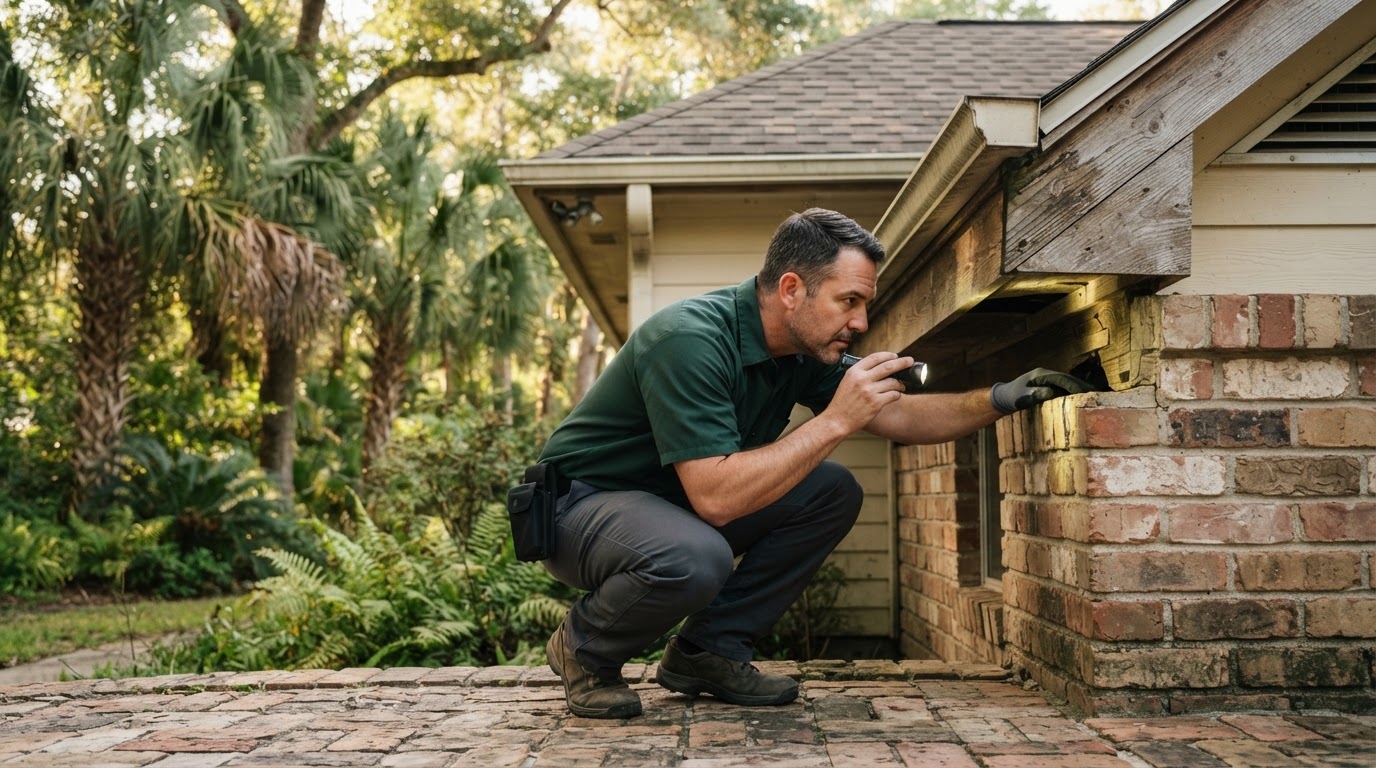
Gaps around vents, eaves, pipes, and the foundation give rats a quiet way inside along the Texas Gulf Coast.
A rat does not need an open door to get into your house. Along the Texas Gulf Coast, where humidity, shifting soils, and older construction are common, even small gaps around the roofline, pipes, or foundation can become a doorway for rodents. Once inside, rats often stay hidden for days or weeks before anyone notices.
Understanding how rats get in is the first step toward keeping them out. The entry points are usually predictable, and a careful walk around the property can reveal where a problem may be starting.
Seeing signs of rats around your home?
Our local team inspects entry points, rooflines, and foundations across Hitchcock and Galveston County.
Rats Only Need a Small Opening
One of the biggest reasons rats get inside is how little space they actually need. A Norway rat can fit through a gap about the size of a quarter—roughly an inch. A young rat or mouse can squeeze through something even smaller. That means a crack that looks too tight to matter can be plenty for a rodent.
Roof rats, which are common along the Gulf Coast, add another challenge: they climb. Trees, vines, fences, and utility lines can all act as a path to the roof, where vents, soffits, and roofline gaps offer a quiet way in. A property that looks well maintained can still have openings you would never notice from the ground.
Common Rat Entry Points Around Gulf Coast Homes
Rats tend to use the same kinds of openings again and again. Worth checking closely:
- Gaps around plumbing and utility penetrations
- Open or damaged vents in the roof, gable, or foundation
- Holes and cracks in the foundation or exterior walls
- Gaps under exterior doors or around garage doors
- Soffit, eave, and roof-return openings
- Damaged or missing weatherstripping
- Gaps where wires or AC lines enter the home
- Crawl-space vents and access covers
- Loose siding or warped exterior trim
Most of these openings develop slowly. Settling foundations, sun exposure, and humidity can all create small gaps over time. A periodic walk around the exterior is often the simplest way to catch them.
Signs Rats Are Already Inside
Because rats stay hidden, the first clue is rarely the animal itself. More often it is a sound, a smell, or a trace left behind. Common signs include:
- Scratching or scurrying noises, especially at night
- Droppings in cabinets, drawers, or along baseboards
- Greasy rub marks along walls or rafters
- Gnaw marks on wood, boxes, food containers, or wiring
- Nests made from shredded paper, fabric, or insulation
- A persistent musky odor
Fresh droppings or new gnawing may mean an animal is still active. Rats tend to follow the same routes, so the same rub marks and droppings often reappear in the same spots.
Why Rat Problems Get Worse Quickly
Rats do not just visit—they settle in. Once they find food, water, and shelter in one place, they tend to stay, breed, and expand their routes. A single opening can turn into a recurring problem if it is never addressed.
The damage can add up. Rats contaminate stored food and surfaces, damage insulation and ductwork, and chew through materials. Gnawed wiring is a particular concern because it can create a safety risk. The longer rats have access to a structure, the more opportunity there is for damage, contamination, and a larger population.
Early attention is usually the simplest path to getting a problem back under control.
What to Do If You Suspect Rats
If you think rats may be getting in, start with a careful look at the exterior. Walk the perimeter and check the roofline from the ground, paying attention to vents, pipes, doors, and the foundation. Note any gap that looks large enough for a rodent to use.
Be careful cleaning up droppings or nesting material. Do not sweep or vacuum dry waste—dampen it first with an appropriate disinfectant and wear gloves. If the affected area is large or hard to reach, professional help may be the safer option.
Removing one rat is only part of the solution. The opening it used to get in still needs to be found and addressed, or the next rat will likely use the same route.
How to Help Keep Rats Out
A few practical steps can make a home far less inviting to rats:
- 1. Inspect the exterior. Check the roofline, eaves, vents, pipes, doors, and foundation for gaps. Pay attention to where utilities enter the home.
- 2. Seal openings. Use rodent-resistant materials suited to the size and location of each gap. Foam alone may not stop a determined rat from chewing through.
- 3. Trim branches back. Keep tree limbs and vines away from the roof and walls so roof rats lose an easy path up.
- 4. Secure food and garbage. Store pantry goods and pet food in sealed containers, and keep trash cans closed and clean.
- 5. Reduce clutter. Clear debris, stored boxes, and yard waste that could provide shelter near the home.
- 6. Watch for fresh activity. New droppings, gnawing, or noises may mean an animal is still getting in. Recheck any opening you have already sealed.
Exclusion works best alongside sanitation and active control. Sealing a gap without confirming what is already inside can trap an animal in the structure, while removing a rat without closing its entry point invites the next one in.
Professional Rat & Rodent Control in Hitchcock, Texas
If you have found droppings, heard noises, or noticed gaps around your home, Breland Pest & Termite can help identify what may be getting in and recommend the appropriate next steps through our rodent control and wildlife control services. We also provide termite control inspections and treatments to help protect wooden structural members from damage.
Breland Pest & Termite is a local, family-owned company serving Hitchcock, Galveston County and surrounding Texas Gulf Coast communities. Our team provides licensed pest and termite control with a local understanding of the conditions that affect homes and businesses in our area.
Don't wait for a small gap to become a bigger problem. Request service now and let us help protect your property.
Call Breland Pest & Termite at (832) 253-8657, visit BrelandBugOff.com, or use the website contact form to request service.
Texas Commercial Pest Control License: TPCL 0987404
Close the Door on Rats This Season
Schedule a professional rodent inspection and let the Breland team find how they are getting in.
Common Questions
Frequently Asked Questions
How small of a hole does a rat need to get inside?
A Norway rat can squeeze through an opening about the size of a quarter, roughly one inch. A young rat or mouse can fit through an even smaller gap. Any opening around pipes, vents, doors, or the foundation should be inspected and sealed.
Can rats climb walls or get onto my roof?
Yes. Roof rats are skilled climbers and often reach the roof by way of trees, vines, fences, or utility lines. Once on the roof, they can enter through vents, soffits, or gaps around the roofline. Trimming branches away from the house helps limit roof access.
What are the most common signs that rats are already inside?
Common signs include scratching or scurrying sounds, droppings, greasy rub marks along walls, gnaw marks on wood or wiring, nests of shredded material, and a musky odor. Fresh droppings or new gnawing may mean an animal is still present.
Do rats only get in through the attic?
No. Rats can enter through the attic, but also through gaps around pipes, crawl spaces, gaps under doors, vents, and the foundation. A thorough inspection checks the whole exterior, not just the roofline.
When should I call a professional about rats?
Call when you hear persistent noises, find droppings or nests, notice gnawing or damage, or smell an unexplained odor. Acting early can help limit contamination and damage, and gives a professional the chance to identify how the rats are getting in.
Keep Reading