What Could Be Hiding in Your Attic This Fall?
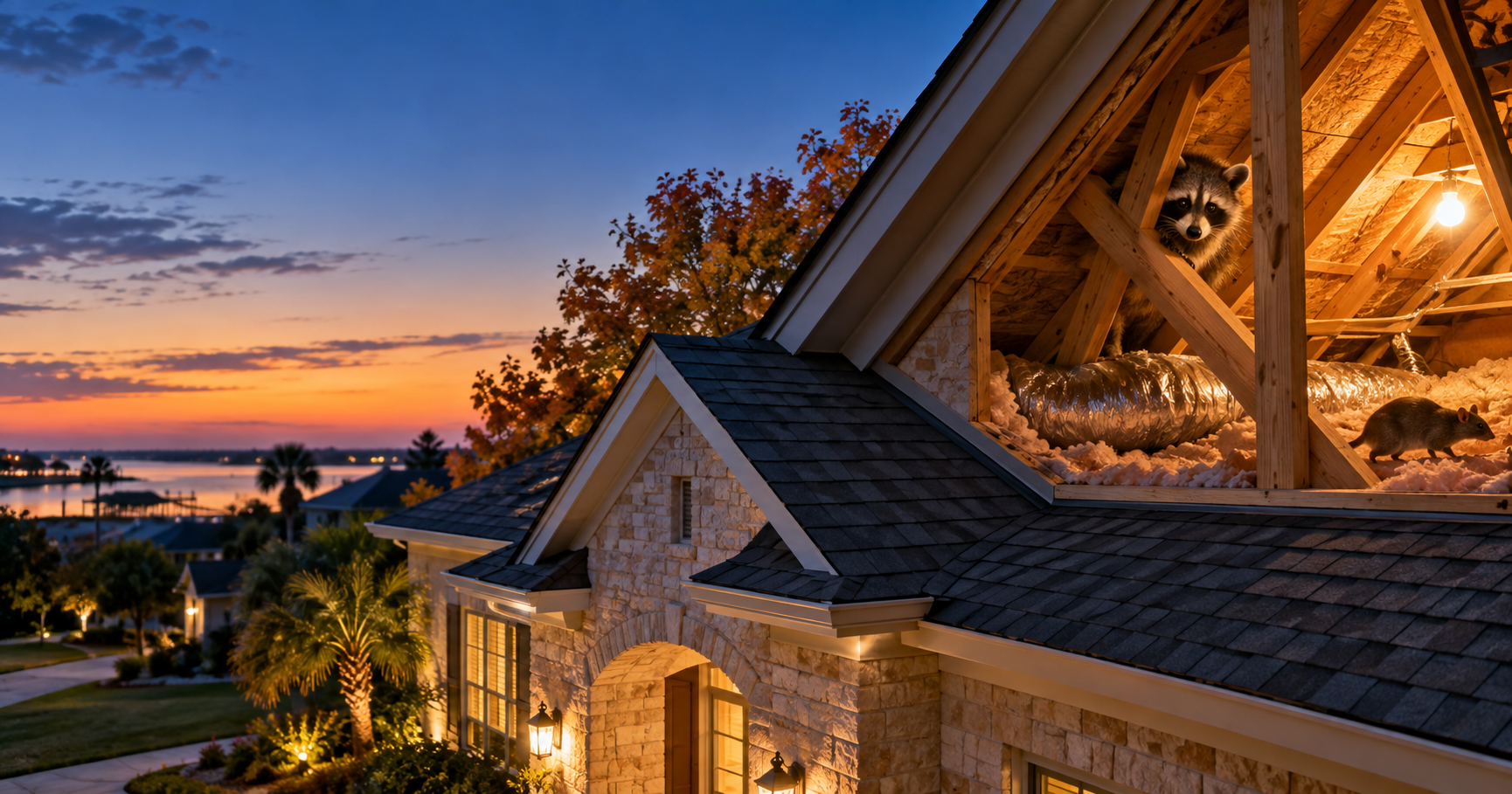
Attics and rooflines offer shelter and nesting material for rodents and nuisance wildlife when Gulf Coast weather changes.
When the weather begins to change along the Texas Gulf Coast, your home can become especially attractive to rodents and nuisance wildlife searching for food, water and shelter. That faint scratching above the ceiling may not be the house settling. It could be a rat, mouse or other animal moving into the attic and making itself comfortable.
September through December is an important time for homeowners and businesses in Hitchcock and throughout Galveston County to watch for signs of unwanted activity. Catching a problem early can help prevent contamination, damaged insulation, chewed wiring and a much larger infestation.
Hearing noises in your attic?
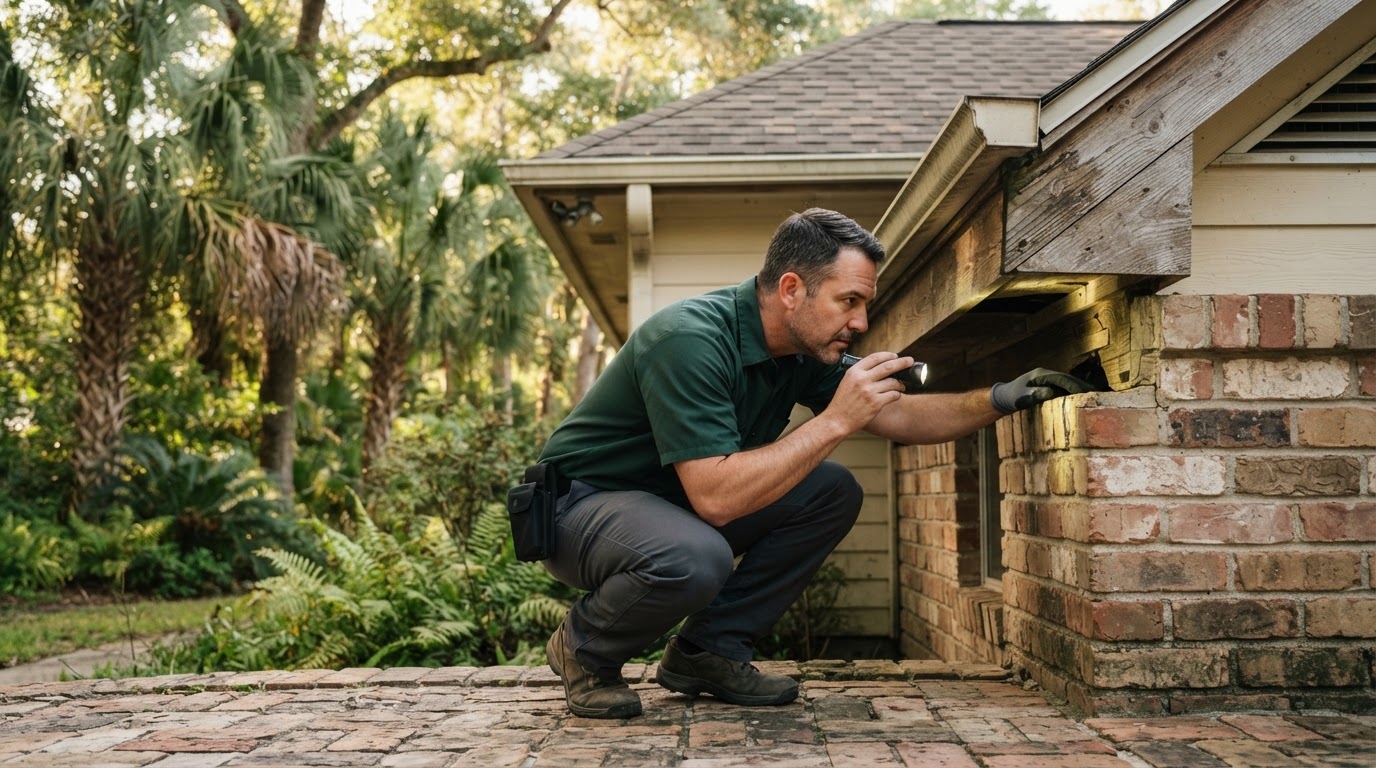
Our local team inspects rooflines, attics, and entry points across Galveston County.
Why Rodents and Wildlife Enter Homes During the Fall
Attics, garages, crawl spaces and storage buildings offer several things animals need: protection from weather, nesting material and easy access to food or water. Even a property that looks well maintained can have small openings around the roofline, vents, utility lines, doors or foundation.
Mice are especially difficult to keep out because they can squeeze through an opening only about one-quarter of an inch wide—roughly the width of a pencil. The CDC recommends checking both the interior and exterior of a building for possible entry points, including eaves, soffits, attic vents, doors, pipes and utility penetrations.
Once rodents or wildlife gain access, they may remain hidden for some time. That is why the first warning is often a sound, smell or trace of damage rather than a direct sighting.
Signs You May Have Rodents or Wildlife in Your Attic
Do not ignore small changes around your home or business. Common warning signs include:
- Scratching, scurrying or thumping sounds, especially at night
- Droppings in cabinets, garages, attics or storage areas
- Gnaw marks on wood, boxes, food containers or wiring
- Torn, compressed or displaced attic insulation
- Nesting material made from paper, fabric or insulation
- Unexplained stains or unpleasant odors
- Greasy rub marks along walls, rafters or entry points
- Damaged vents, soffits, roof returns or exterior gaps
- Pet behavior focused on a wall, ceiling or appliance
Rats and mice often leave evidence before anyone sees the animal itself. Regular inspection makes it easier to address activity before the pests establish a larger nesting population.
Why Waiting Can Make the Problem Worse
A rodent or wildlife issue is more than an inconvenience. Rats and mice can contaminate stored food, leave urine and droppings behind, damage personal belongings and chew building materials. Texas A&M AgriLife notes that house rats and mice can contaminate human and animal food and damage property.
Chewed electrical wiring may also create an added safety concern. In an attic, animals can damage insulation and ductwork or create nesting areas in difficult-to-reach spaces. Wildlife such as raccoons can be particularly destructive after taking up residence in an attic or outbuilding.
The longer an animal has access to a structure, the more opportunity it has to create damage, reproduce or establish repeat entry routes. Early attention is usually the simplest path to regaining control.
What to Do if You Find Droppings
Take care before cleaning an area with rodent droppings, urine or nesting material. Do not immediately sweep or vacuum dry waste. The CDC advises wetting contaminated material thoroughly with an appropriate disinfectant, allowing it to soak and then wiping it up while wearing rubber or plastic gloves.
If the affected area is extensive, located in insulation or difficult to access safely, professional assistance may be the better option. Removing the animal is only part of the solution; the contaminated area and the opening used to enter the building also need attention.
How to Help Keep Rodents and Wildlife Out
Homeowners and property managers can reduce the conditions that attract unwanted animals by taking a few practical steps:
- 1. Inspect the exterior. Look for gaps around the roofline, eaves, soffits, vents, pipes, doors and utility connections.
- 2. Seal vulnerable openings. Use suitable rodent-resistant materials for the size and location of the gap. Foam alone may not stop an animal determined to chew through it.
- 3. Secure food and garbage. Store pantry goods, pet food, bird seed and animal feed in tightly sealed containers.
- 4. Remove outdoor attractants. Keep garbage closed, clean up fallen fruit and avoid leaving pet food outside overnight.
- 5. Reduce hiding places. Clear excess debris and clutter, and trim branches that provide easy access to the roof.
- 6. Watch for fresh activity. New droppings, gnawing, odors or noises may indicate that an animal is still present.
Prevention works best when exclusion, sanitation and active control are approached together. Sealing an opening without confirming what is inside can trap an animal in the structure, while removing one animal without closing entry points can invite the next one in.
Professional Rodent and Wildlife Control in Hitchcock, Texas
If you hear scratching in the attic or notice other warning signs, Breland Pest & Termite can help identify what may be entering your property and determine the appropriate next steps through our comprehensive rodent control and wildlife control services. We also provide full termite control inspections and treatments to protect wooden structural members from damage.
Breland Pest & Termite is a local, family-owned company serving Hitchcock, Galveston County and surrounding Texas Gulf Coast communities. Owner Blake Christensen and the Breland team provide licensed pest and termite control with a local understanding of the conditions affecting homes and businesses in our area.
Do not wait for a small sound in the attic to become a major disruption. Request service now and let us help protect your property during rodent and wildlife season.
Call Breland Pest & Termite at (832) 253-8657, visit BrelandBugOff.com, or use the website contact form to request service.
Texas Commercial Pest Control License: TPCL 0987404
Protect Your Attic This Fall
Schedule a professional rodent and wildlife inspection with Blake and the Breland team.
Common Questions
Frequently Asked Questions
What animals commonly make noises in an attic?
Rats, mice and nuisance wildlife can all create scratching, scurrying or thumping sounds. The time of day, location of the noise and type of damage may help a professional determine what is present.
Does one mouse mean there are more?
A single sighting should be taken seriously. Rodents stay hidden well, and visible activity or fresh droppings may indicate that others are nearby or that an entry point remains open.
Can mice enter through very small holes?
Yes. According to the CDC, a mouse can fit through an opening about one-quarter of an inch wide. Openings around pipes, vents, doors, foundations and rooflines should be inspected carefully.
Should I vacuum rodent droppings?
Do not vacuum or sweep dry droppings. The CDC recommends wetting them thoroughly with disinfectant before removal and wearing protective gloves. Extensive contamination may require professional help.
When should I call a pest-control professional?
Call when you hear persistent noises, find droppings or nesting material, notice gnawing or damage, smell an unexplained odor, or suspect an animal has entered an attic, wall or crawl space. Acting early may help limit damage and contamination.
Editorial Sources & References
Keep Reading